

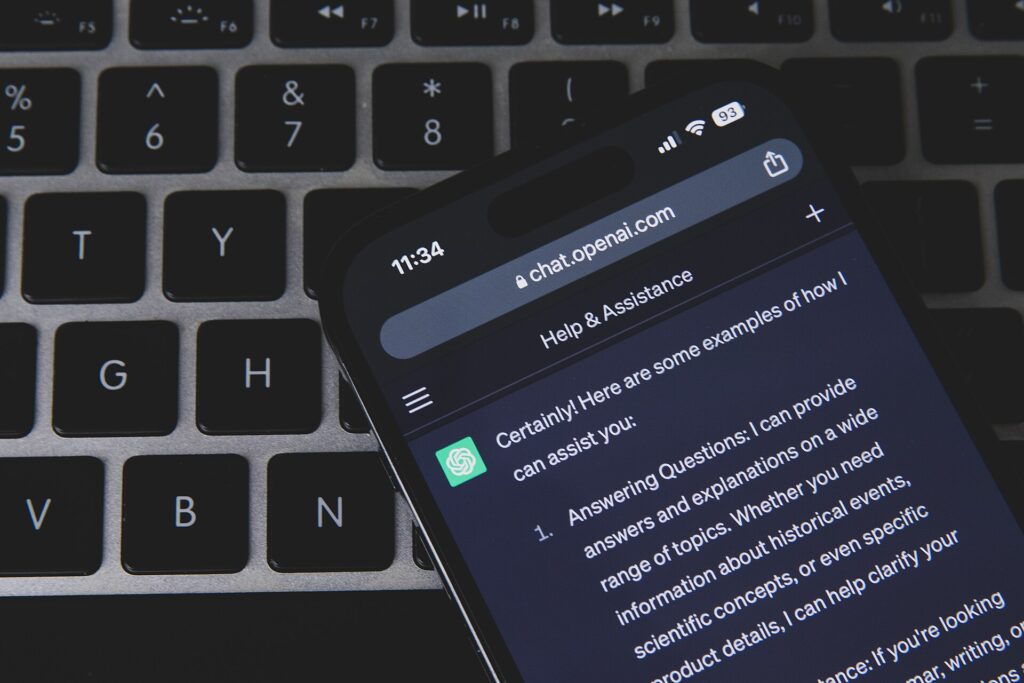
Public use of generative AI has been on an exponential rise since ChatGPT’s release in late 2022. While previous techniques existed prior to ChatGPT, such as generative adversarial networks (GAN), ChatGPT was a significant leap forward in its ability to produce images, video and audio.
From AI generated images being featured in advertisements to the use of chatbots subtly altering our speech patterns, AI seems inescapable. The question of whether this is a positive or negative change leaves people divided.
The impacts of AI use is visible in academic settings. Ideally, AI would be used by students and teachers as a tool, providing feedback and creating efficient workflow. However, it may be tempting to offload tasks to AI, whether that is copying and pasting entire AI responses for assignments or putting drafts into ChatGPT with a prompt to improve the grammar or style. Though this is convenient, it is both dishonest work and a detriment to critical thinking.
To assess the severity of AI use in TCIS students and gain insight on some of its consequences, I interviewed Ms. Vasquez, an English teacher at TCIS and a member of the school’s AI committee.
How much AI do you see in students’ work nowadays?
“From what I see when walking around the class, it’s almost everything. Whether it’s class discussions, if they have their computers with them. In terms of essays, like for example in TOK, it’s also heavily prevalent. And almost every assignment, really.”
I’ve heard there is a team of teachers moderating AI use in schoolwork. What is your goal and what do you hope to see from students?
“Yes, so we want to see students use AI ethically. So it’s not to ban it per se, but it’s “how can we use it in a way that it becomes a tool?” rather than replacing thinking or the voice of the student.”
What are your thoughts regarding AI use in general?
“I honestly think it’s fine if it’s a tool, like for example if you wanna practice writing thesis statements and you want feedback, that’s totally fine. I think what ends up usually being the problem is that students depend on AI to fix their writing in a way that improves it, but they don’t get that practice of actually being able to reflect on their writing and improve it themselves. And so, I think the skill of English, of writing English or even analysis gets a little bit lost. So, I’m not against using it as a tool or as feedback, but I don’t think it’s being used that way.”
What do you think are some consequences of using AI, and have you been seeing any of those consequences currently?
“A lot of the students are struggling to comprehend reading text, because what’s happening a lot, I notice, is that if students are reading an article and they have their computers up, they’ll automatically put the article in AI and say “Summarize this for me.” So they don’t even get that practice of reading through an article and thinking through what the message is or what the author’s trying to say. And then when it comes to writing, they don’t get that practice of writing. I’ve even heard several students say they’ve lost the ability to think because they’ve become so addicted to AI. So just being independent and the thinking and learning process, that’s been severely restricted.”