
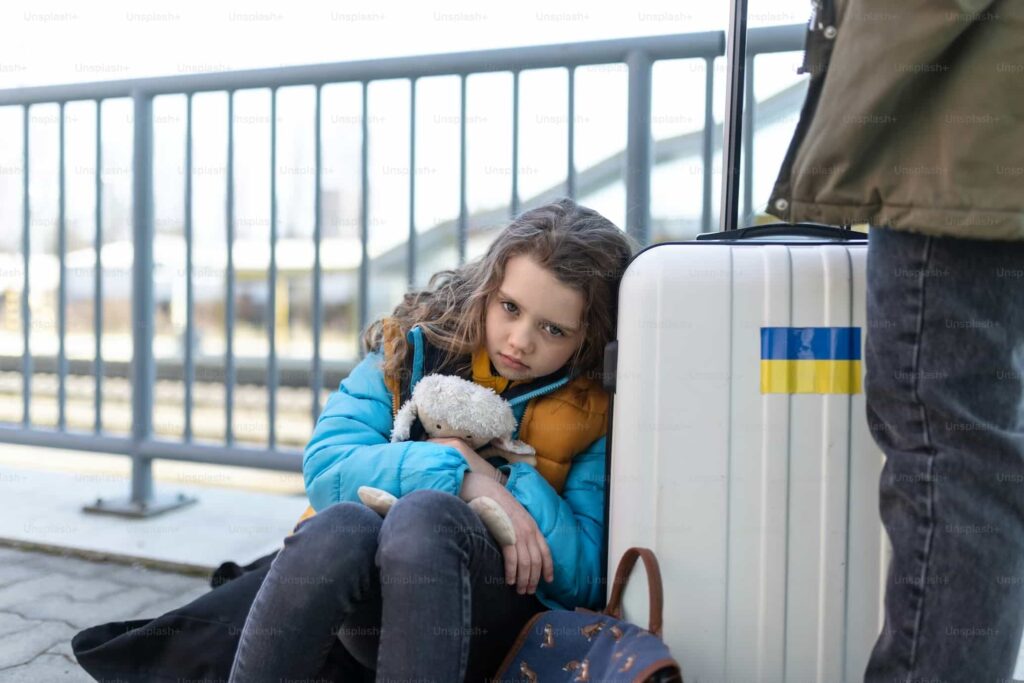
Veronika Vlasova was 13 when she disappeared. One day, she was in her home in Kherson, Ukraine; the next, she was across the border in Russia, without her parents, without consent, and without a way back. Her family searched, called, and asked the same question over and over again: Where is my child? Veronika was told she was being taken somewhere “safe”, but safety does not mean being erased from your own life.
Veronika is one of thousands of Ukrainian children who have been illegally transferred to Russia since the beginning of the war. Some were separated from their parents during so-called “evacuations.” Others were taken after their parents were killed, detained, or simply lost in the chaos of war. Families were rarely asked for permission and were often not informed at all.
International organizations have called these transfers illegal, but for parents, it’s not just a legal case; it’s a loss of their own child, the person they love most, the center of their life.
Children are taken in ways that sound harmless on paper. They are sent to “summer camps”, moved from orphanages, or placed into programs that promise safety and education. In reality, many are cut off from their language, their culture, and even their names. They are pressured to speak Russian, taught a different version of history, and encouraged, or forced, to forget Ukraine. The younger the child, the easier it is to rewrite who they are. And while officials talk about care and protection, parents are left searching for children who are slowly being taught not to remember them.
Marharyta Prokopenko was one of dozens of children taken from a children’s home in the Kherson region in 2022. She was too young to understand politics, but old enough to be separated from everything familiar. Along with other children, Marharyta was moved to Russia and later placed with a foster family. Ukrainian authorities later confirmed that some of these children still had relatives searching for them.
According to reports by international media and human rights organizations, children like Marharyta were listed as “orphans” despite missing or incomplete information about their families. Volunteers and child-welfare workers have described how the youngest children often cannot explain where they are or who they were with before, making the search for their families even more heartbreaking.
Mykyta Nykytyn was 10 years old when he was taken to Russia and placed with a foster family. For months, his grandmother searched for him, navigating closed borders, documents, and refusals. When she finally reached him and brought him back to Ukraine, she noticed something painful: Mykyta had started to forget his own language.
In interviews, his family said that he had been told to speak only Russian and discouraged from talking about Ukraine. After his return, his grandmother said he seemed different: quieter, as if he was afraid to say something wrong.
Bohdan Yermokhin was taken from occupied Mariupol to Russia as a 16-year-old teenager. Unlike many others, he spoke out. In interviews and online posts, Bohdan repeatedly said one thing: “I want to go back to Ukraine.” For refusing Russian citizenship and for publicly asking for help, he faced pressure from authorities and warnings to stay silent.
His case drew international attention. Eventually, Bohdan was able to return to Ukraine, not because the system worked, but because the world was watching. After his return, he said that what hurt most was being told to forget who he was.
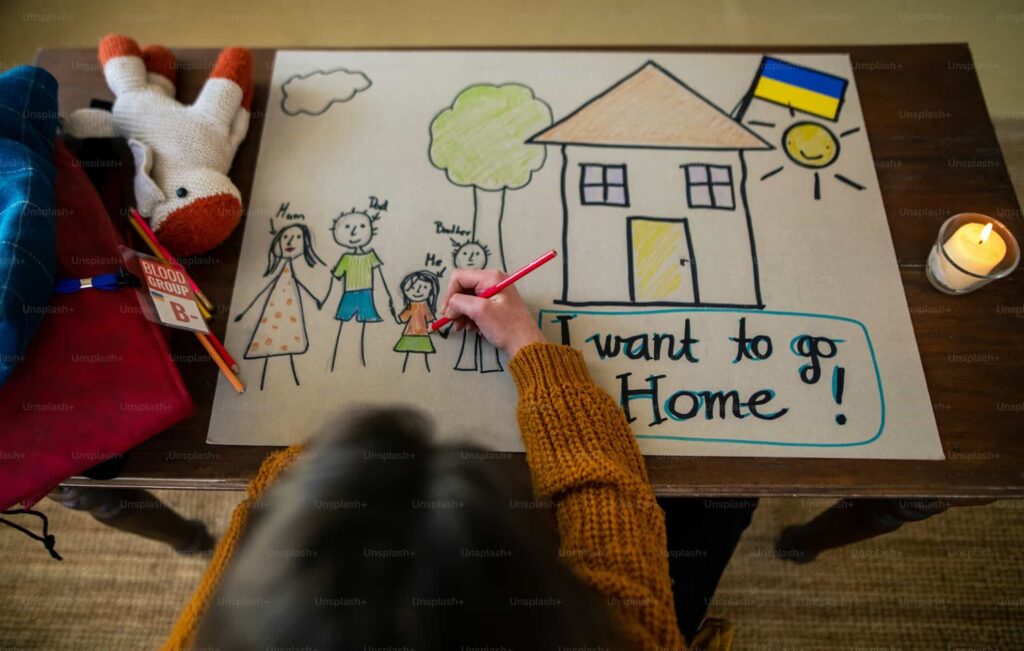
Veronika, Margarita, Mykyta, and Bohdan were able to return home, but many children like them remain in Russia, still waiting for someone to find them. These are kids our age, kids who had homes, families, and plans for the future. Many were born in towns just like ours, laughed at jokes that adults didn’t get, and had dreams bigger than any war. When children are taken from their families, it’s not just geography that’s lost — it’s language, culture, and memory. For young ones, every day away from home makes it harder to remember the songs thief moms used to sing, the language they spoke, and the life they knew before all of this began.
People are working every day to bring these children home and support families who are still searching. Ukraine and its international partners have organized coalitions and summits dedicated to returning children who were illegally taken and reuniting them with their families. At a recent international summit, Ukrainian leaders announced that more than 1,600 children have already been returned through initiatives like Bring Kids Back UA, with support for rehabilitation and reintegration once they are home.
International pressure is also growing. The United Nations General Assembly passed a resolution demanding that all Ukrainian children who were forcibly transferred be returned immediately to their families. Organizations and volunteers — from child rights advocates to grassroots networks — are documenting cases, providing psychological support, and calling on governments to act.Somewhere, a parent is still checking their phone before going to sleep, hoping for a message that never comes. Somewhere, a child is trying to remember a voice, a language, a home that is slowly being pushed away. Children can be taken across borders, but their belonging cannot be erased. And one day, for every question that begins with “Where is my child?” there must be an answer that leads home.