
Time flies; in just a few days, May will be here. For many of us, May is often seen as a month of suffering through finals, but there is more to it. In Korea, May is the family month or 가정의달 in Korean. It is a significant time of year dedicated to recognizing the people in our lives whom we often forget to appreciate.
Why is May considered a family month?
May earned this title because it has multiple holidays specifically designated to honor different members of the family.
- Children’s Day (May 5): Many of us remember this as one of the most exciting days of the year from childhood, a time when we received presents from our parents even though it wasn’t our birthday. However, there is much more to the history of this day than just gifts. The origins of Children’s Day stem from a deep struggle for human rights and national identity. Established during the Japanese colonial rule (1910–1945), the “invention” of this day was actually a key part of the independence movement. The creation of the day coincided with the introduction of the word “어린이”, which brought rights and respect to children who were previously not viewed with such high respect.
- Parents’ Day (May 8): This day is a unique mixture of Western influence and traditional Confucian values. It was first introduced as “Mother’s Sunday” and was officially designated as Mother’s Day in 1956 to honor maternal sacrifices after the Korean War. The holiday was later expanded in 1973 to include fathers, officially becoming the Parents’ Day we celebrate today.
- Teacher’s Day (May 15): This day began in 1963 as a grassroots movement when a group of Junior Red Cross students visited their ill former teacher, sparking a national initiative to honor educators. While it was originally observed on May 26th, the date was moved to May 15th in 1965 to match the birthday of King Sejong, the creator of Hangul and a lasting symbol of education.
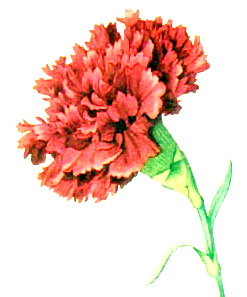
The Symbolism of the Red Carnation
These special events in May are a perfect chance to express appreciation to those around you. If you are looking for a way to show your gratitude, the most common tradition is giving red carnations.
The origin of this tradition actually comes from America, where the founder of Mother’s Day, Anna Jarvis, handed out her mother’s favorite flower at a memorial service in 1908. While they might not be considered the “prettiest” flowers compared to roses or daisies, carnations are known for their strength and vitality, characteristics that closely resemble the role of teachers and parents in our lives.