

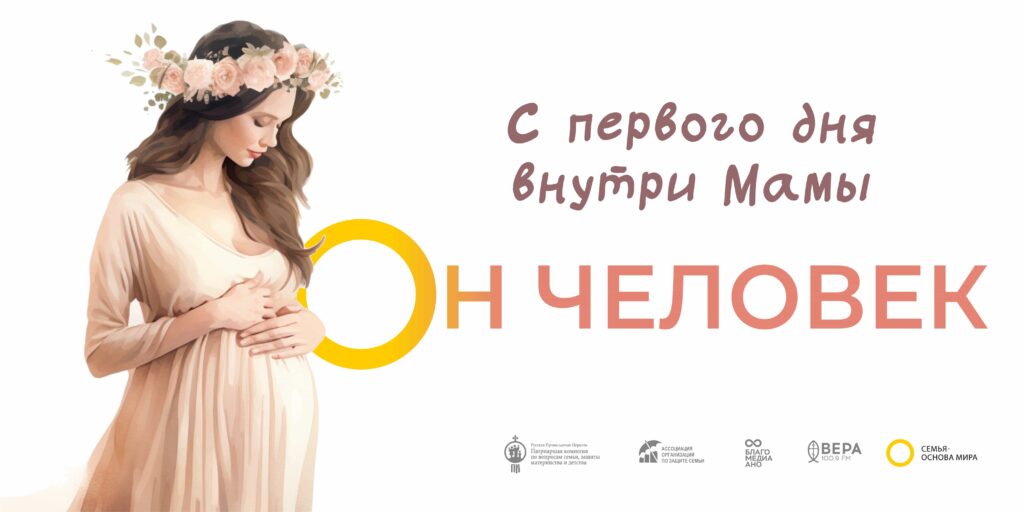
That’s the message people now see at bus stops and billboards across Russia. Printed on large posters and placed in public spaces, the phrase is part of a government campaign aimed at increasing Russia’s birth rate.
At first glance, the goal itself is not controversial. Many countries today are facing declining populations and aging societies, and supporting families can be a necessary and even positive step. But there is a difference between support and pressure: between creating conditions where people feel safe to have children and pushing messages that rely on guilt and fear.
These posters are not simply encouraging birth. They are shaping how women are expected to think and make decisions about their own bodies. In doing so, they risk causing real psychological harm while ignoring the deeper factors that actually influence whether people choose to have children at all.
There is a real problem behind these posters. Russia is facing a long-term demographic decline, with birth rates falling well below the level needed to maintain the population. In 2023, the country’s fertility rate stood at around 1.4 children per woman, far below the replacement level of 2.1. This is not new: fertility in Russia has been below replacement level since the late 1980s.
The situation has worsened in recent years. According to data reported by Reuters, the number of births dropped to some of the lowest levels in decades, with 2024 seeing the lowest birth rate in over 25 years. Birth rates dropped even further in early 2025, with some cases reaching the lowest levels ever recorded in modern history.
This trend is caused by multiple factors. Russia has an aging population, a decreasing number of women of reproductive age, and increasing economic uncertainty. Recent events, including war-related losses and emigration, have further reduced the population and intensified the pressure on the government to reverse the trend.
In response, the government has introduced different policies aimed at encouraging childbirth, including financial support for families, public campaigns promoting “traditional values,” and stricter rules around reproductive choices.
But not all policies are equal.
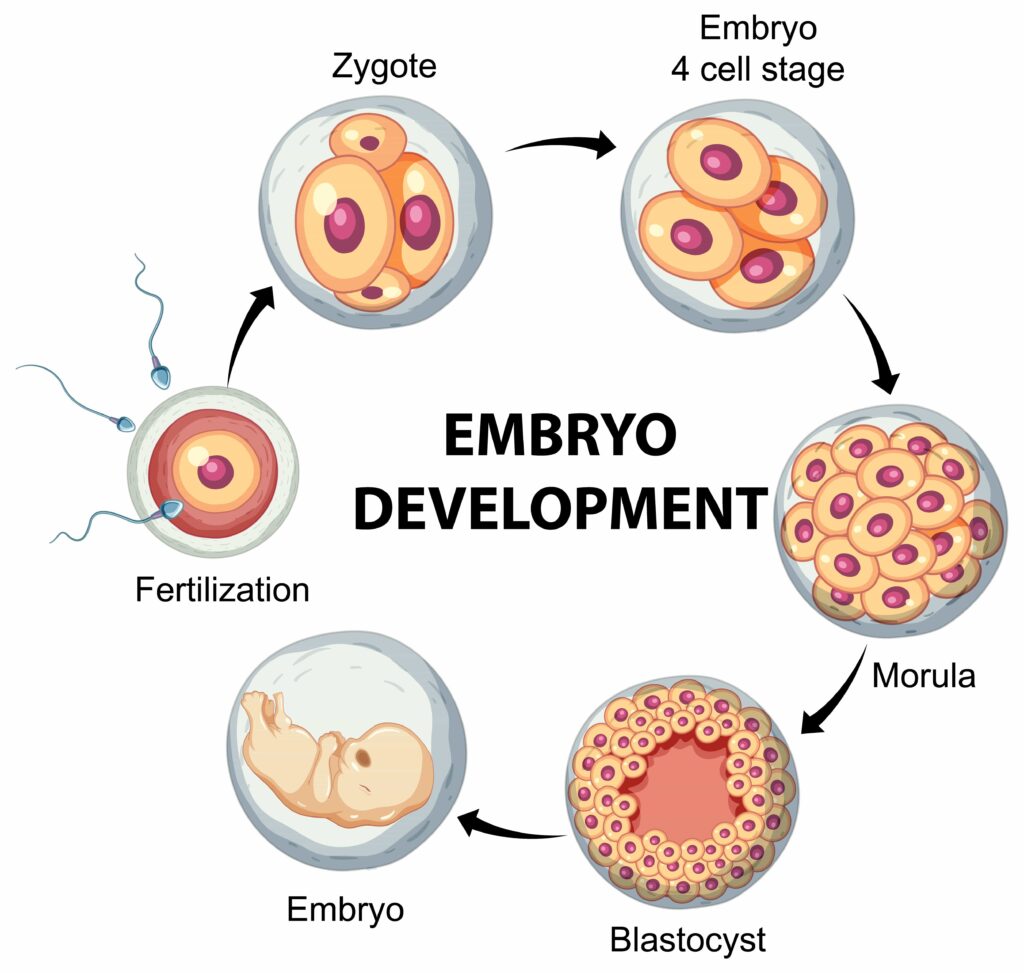
At first glance, the phrase “from day one, it’s already a human” may seem like a simple statement. In reality, it is a carefully constructed message designed to trigger an emotional response. By framing early pregnancy in absolute terms, it encourages a specific way of thinking: one that can evoke guilt, particularly in conversations around miscarriage and abortion. It also ignores a basic biological reality: in the earliest stages, what exists is a cluster of developing cells, not a fully formed human being, as taught at the middle school level and reflected in medical explanations of early development. For example, according to the Cleveland Clinic, just days after fertilization, the pregnancy is at the “blastocyst” stage, described as a cluster of dividing cells that has yet to develop into an embryo.
So is this an attempt to inform, or to influence? Because when public messaging prioritizes emotional impact over accuracy, it risks oversimplifying a complex biological and deeply personal reality.
The emotional consequences of this kind of messaging cannot be ignored. Miscarriage is not a rare or exceptional incident; it is a common part of reproductive health. According to the World Health Organization, around 10–15% of known pregnancies end in miscarriage, and the real number is likely higher due to losses that occur before a pregnancy is even detected.
Despite how common it is, miscarriage often carries a heavy emotional burden. A large global meta-analysis published in a peer-reviewed medical journal found that within just weeks of pregnancy loss, about 32.5% of women experience anxiety, around 30% experience depression, and over 33% report significant psychological stress.
These experiences are frequently intensified by stigma. Miscarriage and abortion remain socially sensitive topics, often surrounded by silence, judgment, or misunderstanding. As a result, many women internalize what happens to them, blaming themselves, questioning their bodies, or feeling that they have somehow failed. When public messaging reinforces the idea that “from day one, it’s already a child,” it does not exist in isolation. It interacts with these already fragile emotional states, potentially deepening guilt and making an already difficult experience even harder to process.
This is where the gap between intention and reality becomes most visible. Policies that restrict abortion are often presented as a way to reduce the number of abortions, but in reality, they do not reduce abortions; instead, they make them less safe.
Each year, an estimated 73 million abortions take place worldwide, and around 45% of them are unsafe (source link). This amounts to roughly 25 million unsafe abortions annually, many of which occur in countries where access to safe procedures is limited or heavily restricted.
The consequences are serious. Unsafe abortions are a major cause of preventable injury and death, responsible for around 8% of maternal deaths globally, and millions of women each year require medical treatment for complications (source link).
These statistics reveal a clear pattern: the more restrictive the laws, the higher the proportion of unsafe abortions. In other words, limiting access does not eliminate the need; it simply makes the outcome more dangerous.
And this pressure does not affect everyone equally. In some contexts, including parts of Russia, public messaging and policy discussions have extended even to younger women and teenagers, encouraging early motherhood despite economic instability and lack of long-term support. In such conditions, reproductive decisions are no longer fully voluntary; they are shaped by pressure, limited options, and fear.
If the goal is to encourage women to have children, then the reality of how women are treated in maternity care cannot be ignored. In Russia, this issue is increasingly described using the term “obstetric violence”, a concept that includes verbal abuse, procedures performed without consent, denial of pain relief, and coercive or disrespectful treatment during labor. A 2024 study of over 2,500 women in Russia found that nearly one in three women (31.5%) reported experiencing at least one form of obstetric violence during childbirth, including bullying, pressure, or medical interventions carried out without proper consent (source link).
Numerous reports and testimonies from Russian hospitals describe women being shouted at, ignored during labor, or subjected to painful procedures without explanation or choice. In such an environment, childbirth is not always experienced as safe or supportive, but as something unpredictable and, at times, traumatic.
Beyond healthcare, there are broader social factors that play a crucial role in whether women choose to have children. Safety, stability, and trust in institutions matter far more than slogans. In Russia, these conditions are often fragile. Many women report concerns about domestic violence and a lack of effective protection. And that is not abstract: Russia decriminalized certain forms of domestic violence in 2017, a move widely criticized by human rights organizations for weakening protections. At the same time, there is a lack of trust in law enforcement, particularly in cases involving family violence, where many women fear that reporting abuse will not lead to meaningful protection. Economic factors further complicate the situation. Rising living costs and financial uncertainty make it even more difficult to decide to have a child, especially for younger women who may already feel unstable in their careers or education.
In this context, the idea that public messaging alone can increase birth rates appears overly simplistic. Research across countries consistently shows that people are more likely to have children when they feel secure: financially, physically, and socially. Without addressing these conditions, campaigns and slogans fail to address the root of the problem.
If the goal is to increase birth rates, there are well-documented ways to do so. This includes financial stability, such as direct support for families and affordable childcare; accessible, high-quality healthcare, where women are treated with respect and can plan pregnancies safely; and policies like paid parental leave that make it possible to balance work and family life.
In many countries, these approaches have proven more effective than moral messaging. Expanding access to reproductive healthcare, including services such as IVF, and creating conditions where parenthood does not come at the cost of economic security are not just social policies; they are demographic strategies that really work.
Simultaneously, this issue is not unique to Russia. Debates around reproductive rights, state influence, and declining birth rates are taking place in many parts of the world, from Poland to the United States and Hungary. While the policies differ, the underlying tension is similar: how far governments should go in influencing personal reproductive decisions, and at what cost.
The first time I went to a gynecologist in a public clinic in Russia, I was met not with care but with harshness. I was scared, which is a natural reaction, especially for a first visit. But there, I was judged for that fear. During the examination, the doctor’s tone was dismissive and impatient, and the procedure itself was carried out without any real effort to explain or reassure me. What should have been a routine medical visit felt overwhelming and humiliating. I left in tears.
Since then, every visit has been associated with stress. Even now, when I go to a private clinic where the treatment is better, that sense of fear has not fully disappeared. In a way, I am paying not just for medical care, but for the basic expectation of being treated with respect.
Experiences like this are not reflected in posters or slogans. They are not addressed by messages placed at bus stops. But they shape how women feel about their own bodies, about healthcare, and about the idea of pregnancy itself.
If the goal is to support life, then policies must also support women, not only in theory but in practice, in hospitals, in laws, and in everyday interactions. Without that, messages like “from day one, it’s already a human” risk sounding less like encouragement and more like pressure.