

A horror film about the dire consequences when someone’s desire takes away another person’s free will and unfolds into a nightmare.
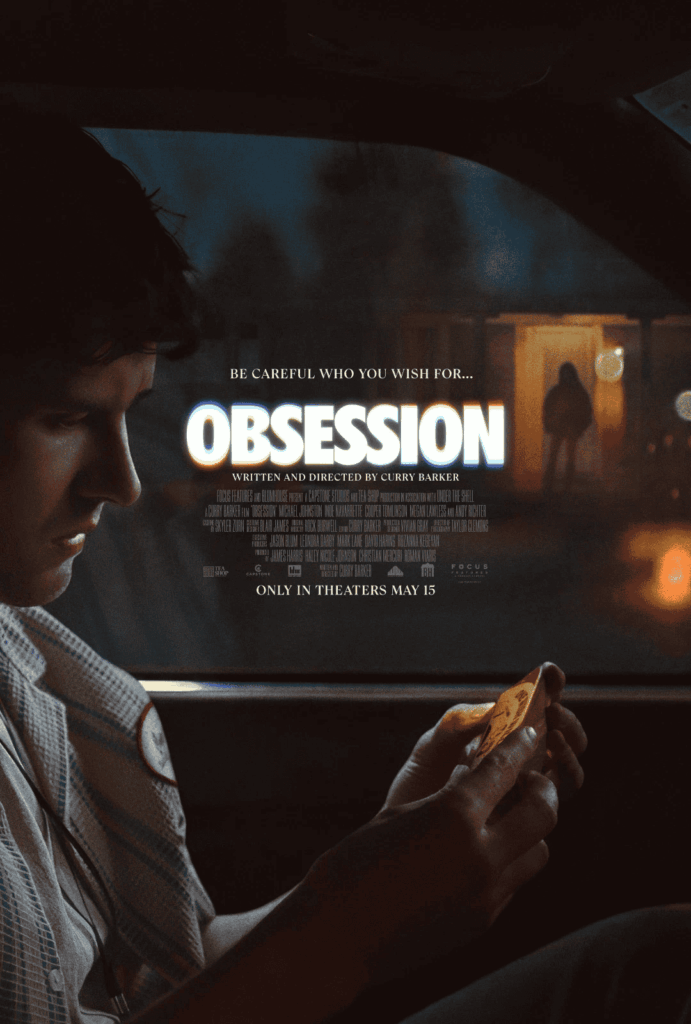
If you had a One Wish Willow, what would you wish for if you knew it would come true? It seems like a simple question until someone else has to live with the answer. Directed by Curry Barker, Obsession takes the familiar idea of being careful what you wish for and turns it into something deeply uncomfortable: a relationship in which love becomes unavoidable.
The film follows Bear, played by Michael Johnston, whose feelings for his longtime friend Nikki lead him to use a mysterious object called the One Wish Willow. He snaps the wish and says, “I wish Nikki loved me more than anyone in the world.” What follows makes his desire increasingly difficult to watch.
Having watched the film in the cinema, I really enjoyed how Obsession maintained a creepy atmosphere while keeping me hooked. I was constantly at the edge of my seat, sensing how wrong everything was, yet still wanting to see the outcome. Even moments of affection become unsettling because I began questioning the intentions behind them. The tension comes from waiting for something to happen, as well as realizing that what is already happening is disturbing enough.
Inde Navarrette’s performance as Nikki was especially effective. Her shifts between affection, intensity, and fear made it difficult to know what to expect from her. As the situation escalated, the film gave its horror an emotional weight that stayed with me after watching. I kept returning to the same question: what does it mean to be loved by someone who has no choice?
One of my favorite aspects of the movie was its soundtrack, specifically “Love is in the Air, Pt. 1” and “Love is in the Air, Pt. 2” by Rock Burwell. What surprised me was that these tracks are not merely eerie in the way horror music is expected to be. Instead, they sound almost…miserable. Hearing them in the film made the story feel deeper, as if the music itself captured the feeling of accepting the fact that something is over before it actually ends.
Conversely, Part 2 takes a sinister turn, shifting from slow, mournful music into something much more intense and threatening. To me, that change communicates a sense of doom, as though something is closing in and there is no way out. Yet both tracks also carry a feeling of nostalgia, of recognizing the value of a moment before it becomes only a memory. They lingered in my head long after the movie ended. I have never thought so strongly that music without lyrics could capture an entire film’s emotional weight so well.
Contains Spoilers Below
The more I thought about the One Wish Willow, the less I saw it as inherently evil. When Bear’s friend Ian wishes for a billion dollars, the money appears. The wish itself does not seem to require some twisted reinterpretation. To me, this suggests that the problem lies in what Bear asks it to do.
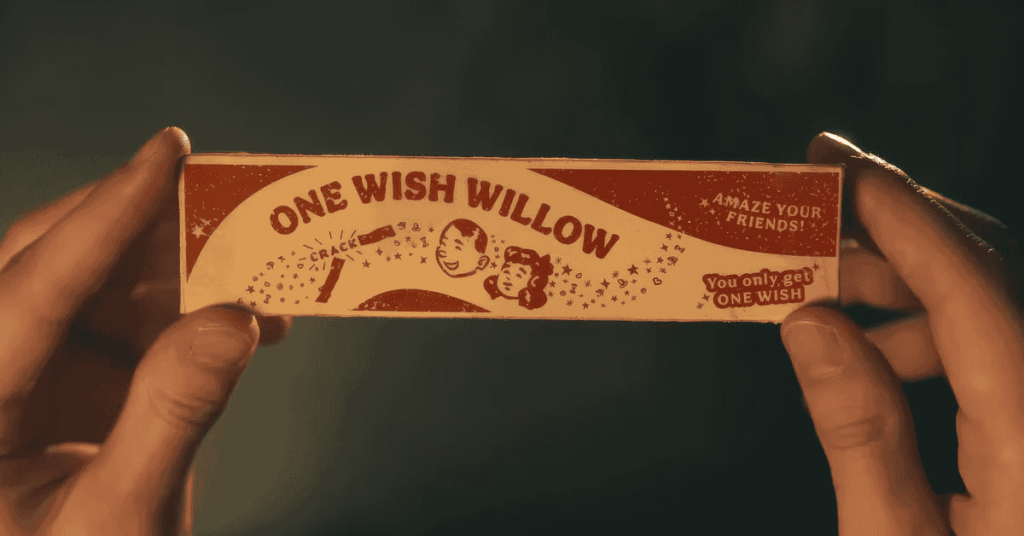
Bear wishes to change another person’s feelings. For this desire to come true, Nikki’s ability to choose must be taken away. The horror is already built into the request, even before he understands its consequences.
This becomes especially painful when we catch glimpses of the real Nikki beneath the version controlled by the wish. Her screams over the phone suggest that she is still there, trapped while something else controls her body. The moments when she briefly regains control and appears horrified make her situation even harder to watch. She has to experience the consequences of a decision she never made.
One of the most disturbing scenes is when Nikki tells Bear that the other version of herself is asleep and begs him to kill her. Her desperation reveals how unbearable her existence has become. Although his refusal is understandable on its own, the scene made me question how willing he is to confront what keeping her with him actually means. He wanted her love but barely considered the person who would have to give it.
Then there is the scene surrounding Sarah’s line, “I was to your left.” If you’ve watched the movie, you already know. The sudden escalation of this scene shows just how dangerous the wish has become for anyone caught around it.
Bear does eventually try to undo the wish, so saying he never attempts to help would be unfair. Still, those attempts cannot erase the selfishness of his original decision. What frustrated me most was that Nikki had given him an opportunity to admit his feelings. He could have been honest and allowed her to respond, but instead chose a wish that removed the uncertainty for him and the choice for her. Whether she might have liked him back remains beside the point: he never gave her the freedom to answer, nor did he test the possibility in reality.
What makes the film even creepier is that its emotional core feels possible outside a supernatural story. There may be no magical wish, but someone can still prioritize their desire for a relationship over another person’s boundaries. They can recognize that they are causing harm and continue because stopping would mean losing something they want. Being afraid of rejection does not excuse taking away someone else’s choices.
This is what makes Obsession more than a frightening wish-gone-wrong story. It explores how easily wanting someone can become wanting control over them. In the moment, people only think of what they will gain and not what will be sacrificed. Here, the sacrifice is another person’s freedom.
For me, the film succeeds because its disturbing scenes leave something to think about once the immediate fear passes. I came away entertained, unsettled, and deeply uncomfortable with Bear’s idea of love. He gets the devotion he wished for but destroys Nikki’s freedom to genuinely choose him.